Ipswich High School – Miss Louisa Neal, our sixth Headmistress 1936-1960
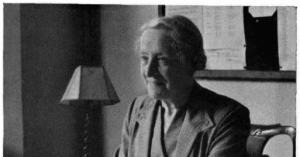
By Miss Naomi Limer, Head of English
Miss Neal became the sixth Headmistress of Ipswich High School in January 1936 aged 35 and remained in the post until August 1960 when she retired, making her the longest-serving leader the school has seen. Before coming to Ipswich, she gained a Classics degree at a London university and taught at Sheffield High School for Girls.
Unsurprisingly, given the length of her service, the school underwent many changes during her time. Most notably, Miss Neal saw Ipswich High through the difficulties of World War Two, welcoming an evacuated convent school to share the Westerfield Road premises, and later relinquishing the Fernleigh building to the army, on top of withstanding the effects of war on a town that was under great threat. The years that followed were strained financially and came with the pressures of rationing, but Miss Neal ensured the school retained the Direct Grant status that was introduced nationally following Butler’s Education Act of 1944. Whilst the school had received funding of this type previously, the commitment by government to fund a quarter of its pupils (on the condition they met the 11+ examination requirement), no doubt went a great way to regaining post-war financial stability.
Improvements continued to be made to the school site, with a new dining room and linkways between buildings being created, an attractive garden between the school houses established, and a new geography room over the gymnasium. Numbers 16 and 18 Westerfield Road were later purchased for extra classrooms and the pupils’ new playing field became a huge advantage for the development of girls’ sports. Greek and German were established as middle school subjects and girls continued to move on to top universities in great numbers. By the time Miss Neal left, plans were afoot for a state of the art block of science laboratories to be built and the Fison library.
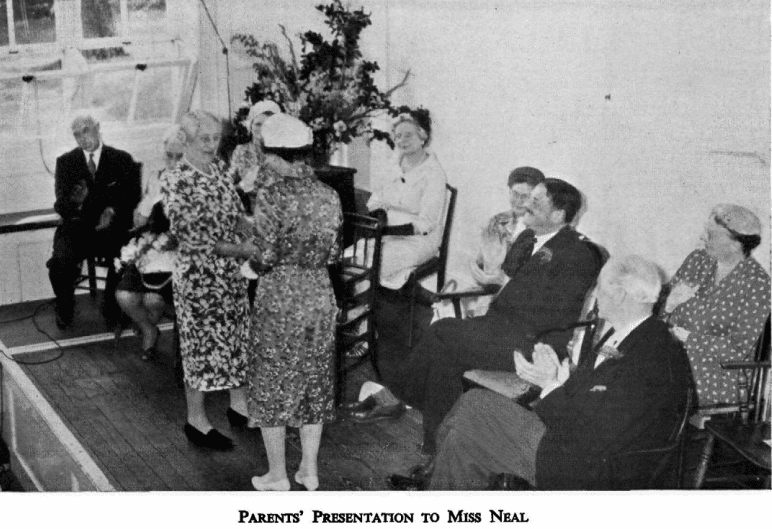
But most of all, throughout her long service what was deeply valued was not just the efficiency with which she ran the school, but the great personal concern for each individual within it. Miss Neal was a disciplinarian and felt strongly that ‘adversity was a spur to greater efforts’, according to the parents who spoke at her retirement ceremony. The representative of the GPDST and Chair of Governors in their tribute said that Miss Neal kept the school in ‘good order’ and was an ‘almost perfect Headmistress’. Past pupils spoke of the high regard (some described it as ‘fear’) they had for Miss Neal, all agreeing that her attitude to right and wrong was ‘as uncompromising as it was courageous’.
Miss Neal died on the 8th January 1989, having remained a part of the school family for the rest of her life. The church at Westerfield was thronged with friends, neighbours and Old Girls. The school choir led the singing, a former pupil read ‘Farewell’ by Walter de la Mare and Cynthia Walsh, wife of the Bishop of Tewkesbury and a former Head Girl and former Governor read the lesson.