Ipswich High School – History of the Drawing Room
By Miss Naomi Limer, Head of English
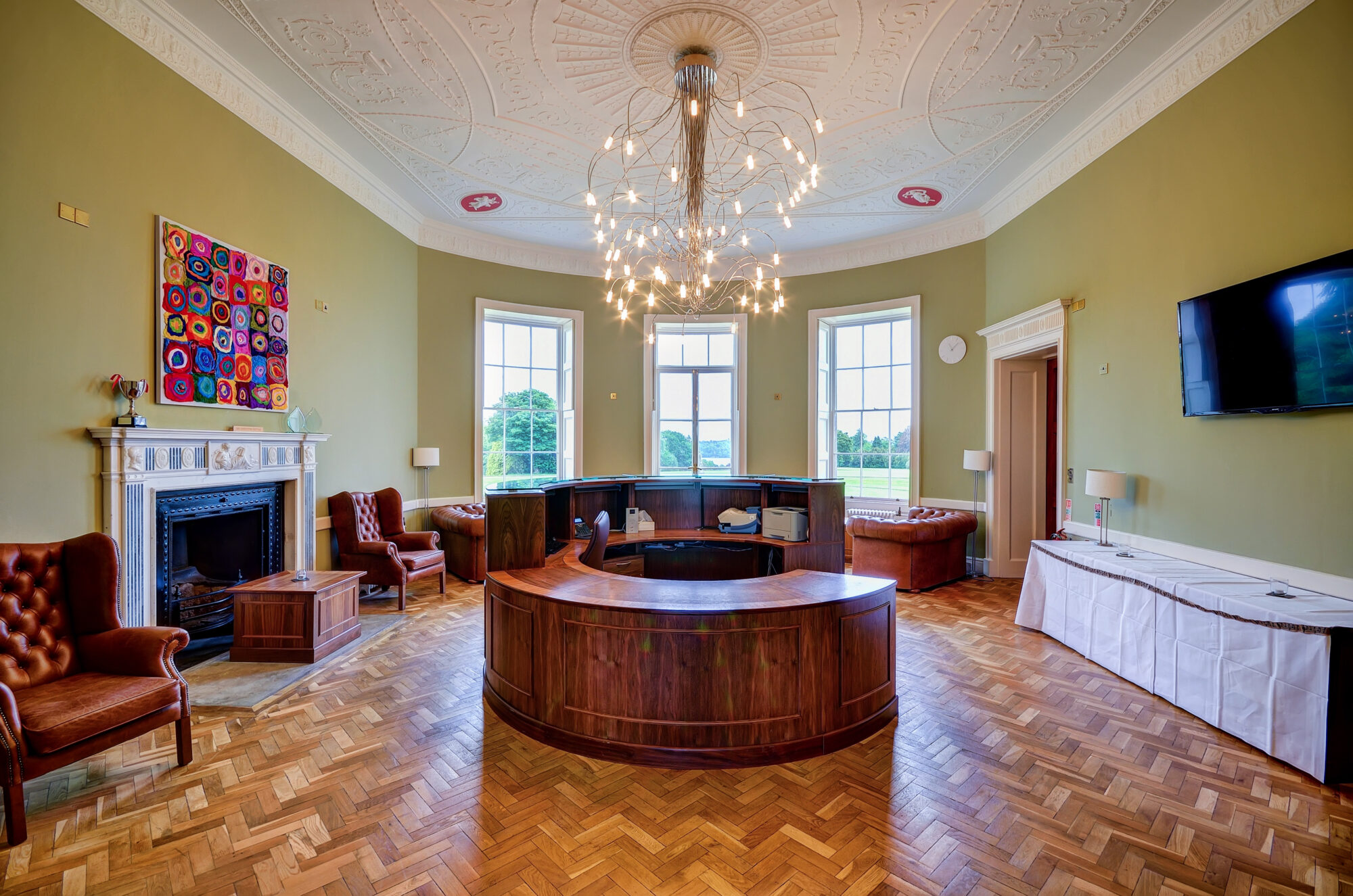
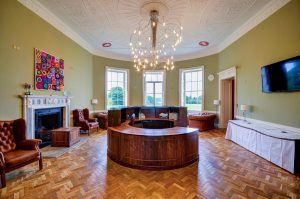
No country house was complete without an impressive drawing room to receive guests and ‘withdraw’ to after dinner, and unsurprisingly, the one at Woolverstone would have been imposing. Now used as the school’s reception, it was situated conveniently next to the formal dining room (now the Head’s office), and the study (now the Leggett Room).
The entrance to the drawing room was originally flanked by ornamental statues in the niches either side of the doors, later replaced by warming ovens.
John Johnson, the architect who designed Woolverstone Hall, created the beautiful ceiling with his trademark draped figures (these also feature in several of his buildings in Fitzrovia, where the Berners of Woolverstone Hall owned extensive property) and intricately patterned plasterwork.
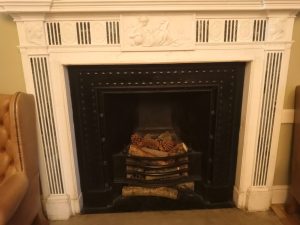
he fireplace which stands in the room now is a replica of Johnson’s original, made of white marble with Siena inlay and is very similar in design to his other fireplaces at country houses such as Killerton in Devon and Hatfield Place in Essex.
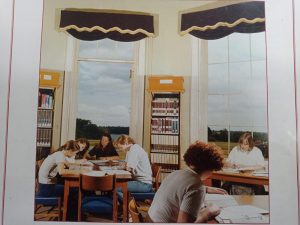
The view from the drawing room French windows down to the Orwell was described as one of the loveliest in England in a Gardeners’ Chronicle edition of the 1870s and must surely be one of the few views in England that has remained unchanged since that time. Looking east, the room benefits from the warmth of the morning sun and the fantastic sunrise over the river.
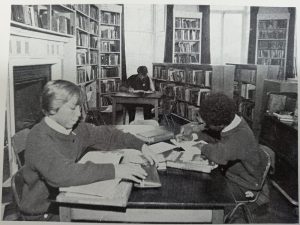
When Woolverstone Hall Boys’ School moved into the premises in 1951, the drawing room became the library, a function which continued when Ipswich High School relocated in 1992. In 2015, the library was relocated to the teaching block and the room became once more a welcoming space for visitors.