Woolverstone Hall in World War Two
By Miss Naomi Limer, Head of English
In 1937 the Nuffield Trust, on behalf of Oxford University, acquired the Woolverstone Hall estate for £185,000 as part of the university’s increasingly large property portfolio. The estate comprised over 6000 acres of farmland on the Shotley peninsula, including almost six miles of frontage to the River Orwell.
Woolverstone Hall and its grounds then lay empty for the first time in almost two hundred years. With the Berners family who had built and improved the estate over generations and the large staff who maintained it gone, the Hall and its grounds fell into a state of silent disrepair.
The outbreak of World War Two saw some enemy action in the village, the occasional bomb damaged local buildings and scarred the landscape. At St Michael’s church, a stained glass window was destroyed in an air raid, and German bombers were seen dropping bombs over Woolverstone Park in 1944, causing large craters to appear along the shoreline. Thankfully, casualties appear to be low in number and relatively minor in terms of injuries sustained, yet local men lost their lives in the wider theatre of war. As with many buildings of its type and situation in the UK, Woolverstone Hall and its surrounding parkland was requisitioned by the War Office for troops in 1939, and later by the Admiralty for use as a ‘stone frigate’ naval training station, being commissioned in 1942.
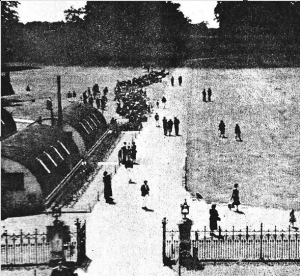
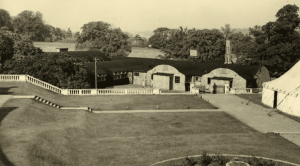
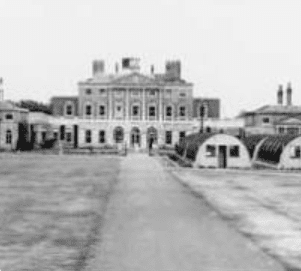
As HMS Woolverstone, Woolverstone Hall played an important role in the preparations for the D-Day landings, training soldiers and sailors as part of a combined forces effort, acting as a planning and operational base, and being used for billeting troops and members of the WRNS in the 52 Nissen huts that were placed over the front and back lawns. A temporary observation block was erected on the roof of the main building, as can be seen in photographs taken at the time and in the years immediately after the war.
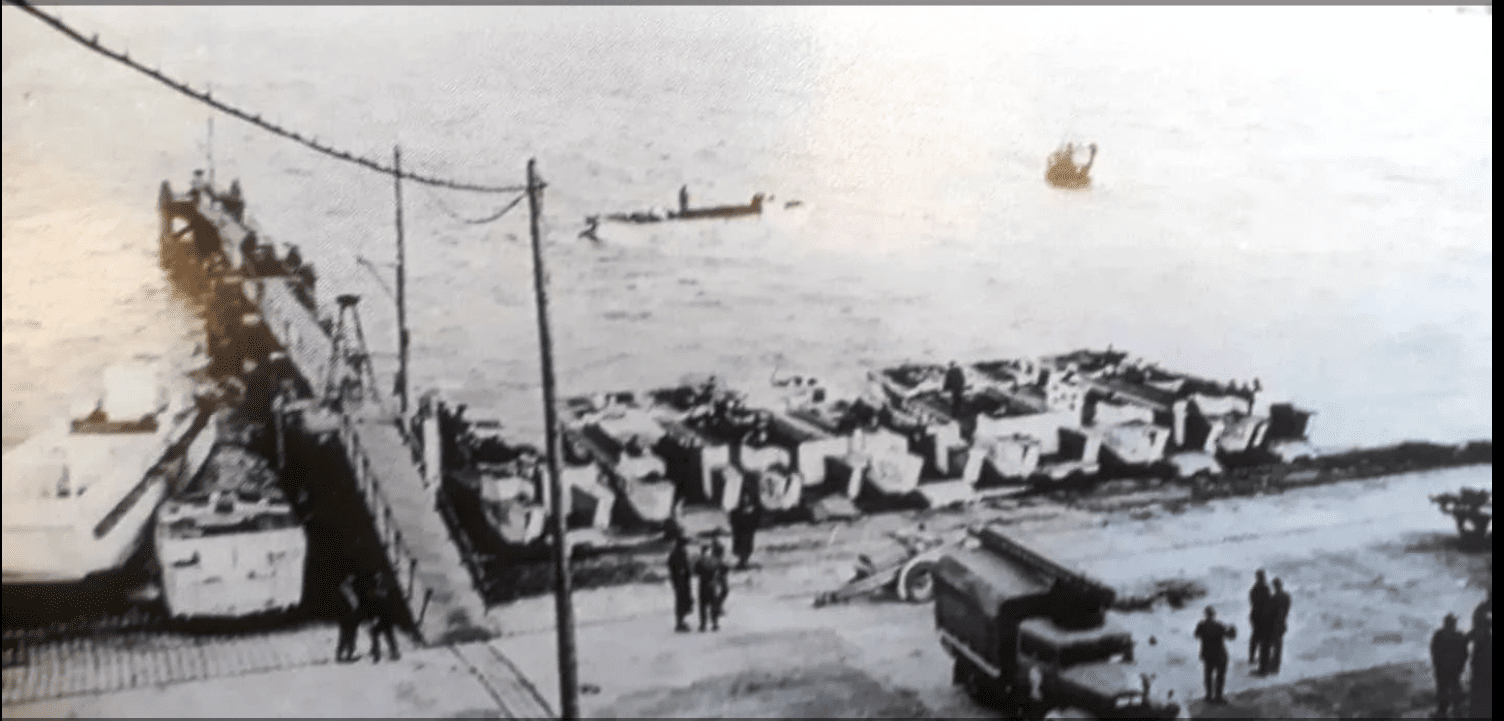
HMS Woolverstone also played a part in Operation Quicksilver during May and June 1944, in which moored dummy landing craft were part of an Allied deception aimed at making an invasion on the shores of Calais, rather than Normandy, look likely. ‘Bigbobs’ as the dummy flat-bottomed craft were known, were constructed under the veil of darkness and shifted down to the marina ready to be seen by German reconnaissance aircraft.
In the month prior to the D-Day invasion, over 1000 personnel were placed in ‘lockdown’ and stationed at the Hall, with many eventually leaving for France from the shores of the Orwell, having either been based at Woolverstone or further upriver.
What happened next is regarded as one of the biggest Allied successes of WW2, with a total of 160,000 Allied troops and 6,000 vehicles crossing the Channel to France– an endeavour of which HMS Woolverstone played a small, but by no means insignificant part.