Ipswich High School – History of the Stable Block
By Miss Naomi Limer, Head of English
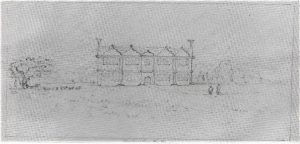
Before Woolverstone Hall was built, the manor house that preceded it sat on the site of the current stable block and was leased by William Berners and his family for a period of approximately 30 years. The original house was most likely from the Tudor period and whilst only one drawing of it is believed to exist, the bricks from the demolished house can still be seen in the construction of the stable block. The introduction of brick tax in 1784 led to larger, standardised bricks being used in construction and we can see smaller (and therefore older) bricks on the upper courses of the stable block, suggesting they were from an earlier structure predating 1784.
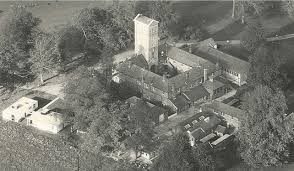
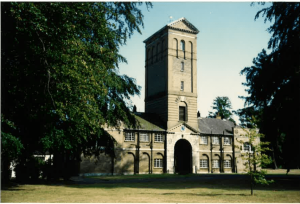
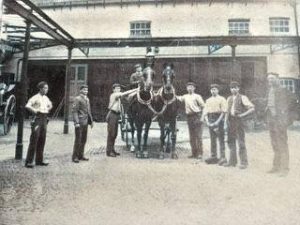
Knowing that Woolverstone Hall was built by John Johnson in 1776, and that the same architect designed the stable block, we can infer that both buildings were erected at roughly the same time. Johnson used Woolpit brick to create the frontage with the entrance of rusticated Portland stone with Coade ornamentation, similar to that of the Hall. The water tower was a later addition, added in the mid -19th century. Inside the building is an open quadrangle with two- storey red brick wings enclosing the large space, enabling it to accommodate a number of horses, carriages and associated workmen who lived on the estate. Census records show a variety of employees living at the stables over the years, in 1891 for example, coachman David Catchpole and his family lived in the coach house
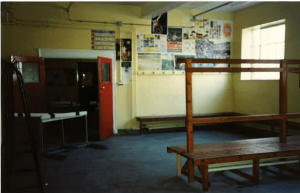
and four other grooms and stablemen lodged in smaller rooms to the rear of the building, these may well be the men featured in the picture below. The Berners family were great hosts and no doubt the stable yard and coach house were busy, particularly when large parties descended on the estate for shooting weekends. When the estate eventually passed to the London Council in the 1950s, the stable block functioned as accommodation and amenities for pupils of the London Nautical School and their successors, the boys of Woolverstone Hall School. Many Old Boys recount the freezing conditions when having to shower in the stable block or visit the sick bay once housed there and they were probably very grateful when the newer dormitories were built in the late 1950s.
The stable block was used in the early years of Ipswich High School’s relocation in the 1990s, often for drama lessons (and illicit explorations), but has been largely empty since, the space not being conducive for classroom learning and as a Grade II listed building, its limitations preclude much change. It is out of bounds for pupils, but a wander around the outside soon reveals its past lives in its architectural form and by the carved names of Old Boys and the hint of the painted ‘sick bay’ sign.
Development as a new Sixth Form Centre and Boarding House may one day be realised.