Ipswich High School – How it all began
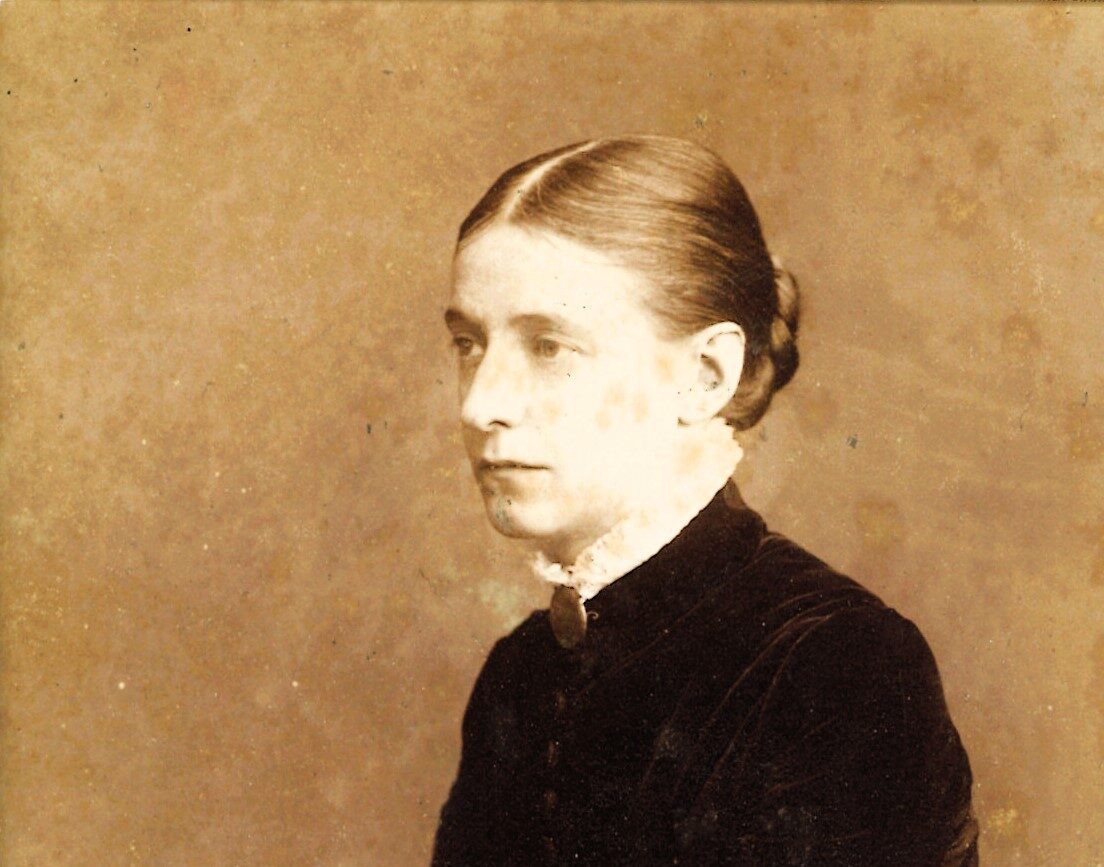
Education underwent much reform in the reign of Queen Victoria, and the provision of formal education exclusively for girls was undoubtedly one of the most progressive changes.
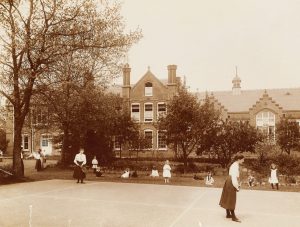
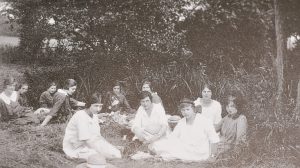
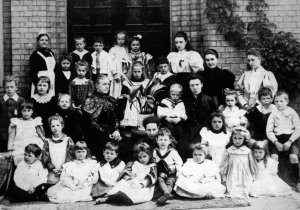
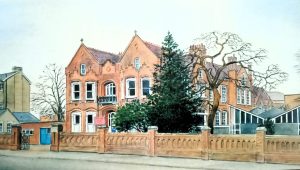
Education underwent much reform in the reign of Queen Victoria, and the provision of formal education exclusively for girls was undoubtedly one of the most progressive changes. The formation of the Girls’ Public Day School Company in 1872 encouraged an approach by Dr B. Chevallier, Dr W.A. Elliston, Mr J.R. Jeffries, Mr R.L. Everett and the Reverend V.V. Granville -Smith of Ipswich with a view to opening a school in the town, of which they were to form the board of guarantors. Their proposal was successful and Ipswich High School for Girls GPDSC opened on the 29th April 1878 under the Headship of Miss Sophie Youngman.
Originally based in the Assembly Rooms on Northgate Street (now the EasyHotel), the initial intake was of 43 pupils. Conditions can’t have been easy with shared teaching rooms, limited outdoor space and no electricity, but such was the determination and resilience of young girls seeking an education that the best of their circumstances was made.
There was a large gymnasium on the ground floor which also served as a dining room, dance room, drawing studio and a space for students to spend their breaktimes. The kitchen was next to this, and the Kindergarten room was adjacent to the downstairs cloakroom. Prayers were held at the start of every morning in the large teaching room on the second floor. Red partition curtains were then drawn, and the room was divided for a series of 45 minute lessons for each age range. Miss Youngman’s desk sat in the centre of the shared teaching room and when not instructing the older girls, she would quietly observe the various classes held around her. Apparently, she enjoyed parsing (the analysis of sentences) and insisted on clarity of thought and expression from all pupils. Girls were taught Latin and modern foreign languages, art, music and at the specific direction of Miss Youngman, all were to study at least one year of physiology. It is perhaps no surprise that so many of the early pupils of Ipswich High School went on to study these subjects at university, with an impressive number winning scholarships for Oxford, Cambridge and London universities.
Afternoons were set aside for examination prep, needlework, gymnastics and tennis (at nearby courts or private houses lent for the occasion) and at 4pm classes were dismissed with day pupils going home and boarders returning to one of the boarding houses in town.
Initially, there was no uniform except at the annual prize giving when pupils wore white cotton dresses with cherry red sashes. Once the school had been established for a few years, a winter uniform of a navy blue serge dress with red smocking was introduced, the summer uniform consisted of a white and blue cotton frock with a navy cardigan and a boater hat.
Improvements were made to the premises over the 21 years of Miss Youngman’s headship with the addition of extra classrooms and a more sizeable playground enabling the school roll to increase significantly.
Pupils spoke very fondly of Miss Youngman. According to an Old Girl, Ethel Agnes Palmer, whose memories were recorded in the school newsletter of 1928, “her presence compelled rather than commanded ; it radiated, not outward brilliance, but an inner fire of spirit which burned up all smallnesses, and kindled in those who responded the white flame of her ideals. She saw visions and dreamed dreams in advance of her time, and as we look back on our lives and see what in them of good we owe to her, we cannot but take courage and thank God for her.”
Recalling Miss Youngman in 1957, another Old Girl, Elsie Hoare said “she was gentle in her speech, and I never saw her lose her temper or get flustered…she could be firm and stern if occasion demanded.”
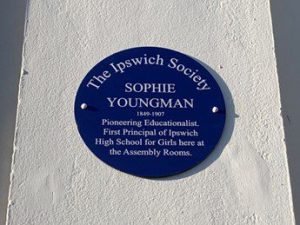
By the time Sophie Youngman retired in 1899, the school had grown into a thriving and highly regarded institution which shaped its pupils into bright, industrious and pioneering young women. In 2019, a blue plaque was unveiled in her honour at the site of the Assembly Rooms.
The next Headmistress was Miss Kennett, who continued to strengthen the school’s success and due to the steady increase in numbers, had secured new premises in Westerfield Road, Ipswich by 1907.
In 2028, Ipswich High School will celebrate 35 years at Woolverstone Hall and 150 years as a school. Over the last 146 years, our school has continued to grow and provide a tailored education for our students, emphasising the individuality of each and every pupil that studies here.
It is important to acknowledge the changes the school has gone through in the past and, undoubtedly, the exciting changes that it will go through in the future. At the heart of everything is our commitment to provide every pupil with the foundations to flourish.